Subtotal ₨ 0





Email :40
Google Ads for Real Estate:
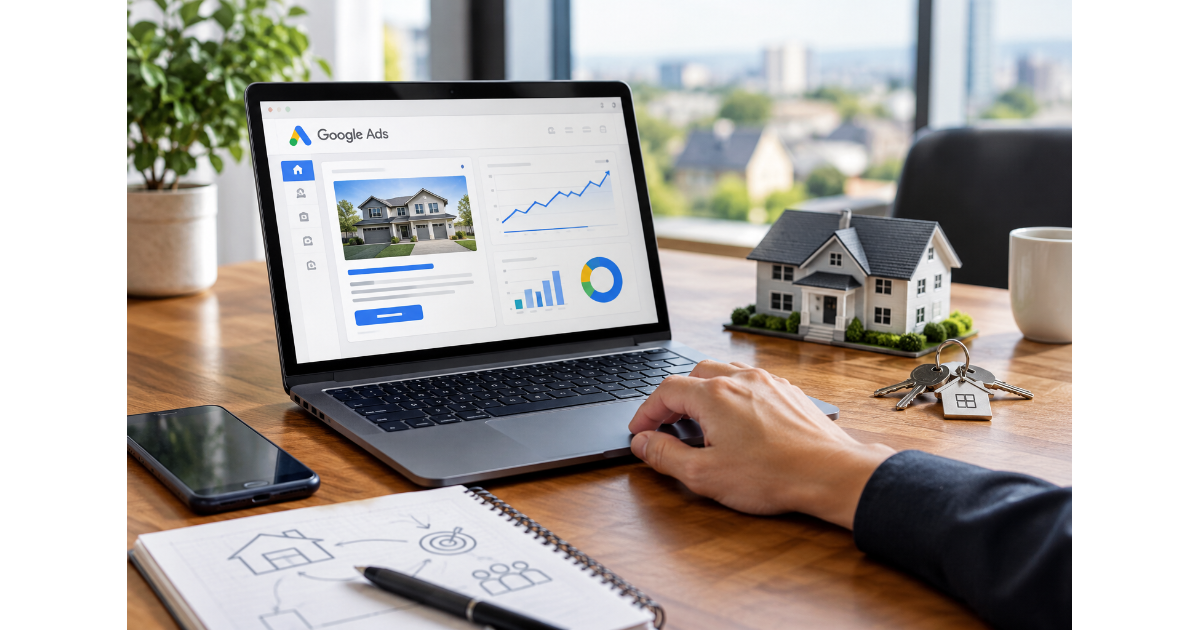
If you’ve ever typed “homes for sale” into Google and noticed a handful of listings sitting right above the organic results, you’ve already seen Google Ads for real estate in action. That top spot isn’t luck or magic SEO, it’s paid advertising, and it’s one of the fastest ways to get in front of people who are actively searching for a home, a buyer, or a fast cash sale. Google Ads for real estate can feel intimidating at first, especially with all the bidding options, keyword match types, and campaign settings, but once you understand the structure, it becomes one of the most reliable lead sources an agent, broker, or investor can build. This guide walks through exactly how to set up, run, and optimize Google Ads campaigns for every corner of the real estate business, from buyers browsing real estate listings to sellers wondering what is my home worth to investors hunting for undervalued real estate listings.

Why Google Ads Deserves a Place in Every Real Estate Marketing Plan
Real estate is a search-driven business. Before someone ever calls a real estate agent, they usually spend weeks Googling things like houses for sale near me, comparing neighborhoods, and checking home values. Google Ads puts you directly in front of that intent at the exact moment someone is looking, which is very different from social media ads that interrupt people scrolling for entertainment. Unlike organic search rankings, which can take months to build, a well-structured Google Ads campaign can start generating leads within days. That speed, combined with precise targeting by location, device, and even time of day, is why so many top-producing real estate brokers treat paid search as a core part of their marketing budget rather than an occasional experiment.
Understanding the Three Types of Real Estate Buyers You’re Advertising To
Before building any campaign, it helps to recognize that real estate advertising isn’t one-size-fits-all. There are essentially three distinct audiences searching Google every day: people who want to buy a home, people who want to sell their house, and investors or cash buyers looking for deals. Each group searches with completely different intent and completely different keywords, which means each one needs its own campaign structure, ad copy, and landing page. Mixing all three into one generic “real estate agent near me” campaign is one of the most common mistakes agents make, and it usually results in wasted ad spend and confused messaging.
Building Campaigns Around Homes for Sale and Real Estate Listings
For the buyer side of the business, your campaigns should center around the terms people actually type when they’re browsing, like homes for sale, real estate listings, and houses for sale near me. These are high-volume searches, which means more competition, but also a much bigger audience. To stand out, layer in more specific long-tail searches such as three bedroom houses for sale, luxury homes for sale, townhouses for sale, or condos for sale downtown with pool. These longer phrases usually cost less per click and attract buyers who already know exactly what they want, which tends to produce higher-quality leads than broad searches. A dedicated landing page showing relevant listings for that exact keyword, rather than a generic homepage, makes a huge difference in conversion rates.
Capturing First-Time Buyers With the Right Messaging
A large slice of the buyer market consists of people searching for first time home buyer programs, and this group deserves its own ad group entirely. These buyers are often nervous about the process, worried about down payments, and actively looking for guidance rather than just listings. Ads that mention assistance programs, low down payment options, or a free consultation tend to perform better with this audience than ads simply promoting available real estate listings. Pairing this campaign with a landing page that explains the buying process in simple terms, rather than just showing a search bar, helps build trust before the first phone call even happens.
Turning Sellers Into Leads With High-Intent Search Terms
On the seller side, the highest-intent keywords are phrases like sell my house, home value estimate, and what is my home worth. People searching these terms are not casually browsing, they’re actively trying to figure out what their property could sell for, which makes them some of the most valuable clicks you can buy. Campaigns targeting these terms should point to a fast, simple home valuation landing page rather than a generic contact form, since sellers want an instant answer, not a wait-and-see promise. Following up quickly after someone requests a valuation, ideally within minutes, dramatically increases the chance of turning that click into an actual listing appointment.
Positioning Yourself as the Best Listing Agent in Search Results
Competition for seller keywords is intense, especially in busy markets, because everyone wants to be seen as the best listing agent. To win here, your ad copy needs to do more than say “contact me for a free valuation.” Highlighting specific proof points, like average days on market, recent sale prices above asking, or the number of homes sold in the area last year, helps differentiate your ad from a dozen others saying the same generic thing. Ads for real estate brokers and agencies tend to perform better when they include a specific local statistic rather than a vague promise, because sellers are naturally skeptical and want evidence before picking up the phone.
Targeting Sellers Who Want Speed With How to Sell a House Fast Campaigns
Not every seller cares about maximizing price, some just want the process done quickly. Searches like how to sell a house fast or cost of selling a home indicate a seller who’s weighing their options, possibly comparing a traditional listing against a faster alternative. Ads targeting this intent should acknowledge the urgency directly, mentioning quick closing timelines or simplified processes. It’s worth running this as a separate campaign from your standard listing-agent ads, since the messaging and landing page experience should feel noticeably different, focused on speed and simplicity rather than maximizing sale price.
Explaining Costs Transparently to Build Trust With Sellers
Sellers frequently search for real estate agent commission rates and flat fee MLS listing because cost is often their biggest hesitation. Rather than avoiding this topic in your ads, addressing it head-on can actually improve click-through rates. An ad that transparently mentions competitive commission structures or flat-fee options tends to earn more trust than one that stays vague about pricing, because sellers appreciate not having to guess. This is also a great opportunity to create a dedicated landing page breaking down exactly what a seller pays and what they get in return, which reduces bounce rates and pre-qualifies leads before they even call.
Building Visibility With Top Rated Real Estate Agency Near Me Campaigns
Local search terms like top rated real estate agency near me combine intent with a trust signal, since the searcher is already looking for social proof. Campaigns targeting this phrase perform best when paired with location extensions, star ratings from Google reviews, and call extensions so people can reach you directly from the ad without even clicking through to a website. This keyword also works well alongside remarketing campaigns, showing ads to people who’ve already visited your site once, reinforcing your credibility the second time they see your name.
Reaching Investors and Cash Buyers With a Completely Different Approach
Investors and cash buyers search Google very differently from typical homeowners, and their campaigns need their own dedicated structure entirely. Investors aren’t browsing pretty photos of homes, they’re scanning for numbers, cap rates, and deal potential. This means your ad copy, landing pages, and even your bidding strategy should look almost nothing like your buyer or seller campaigns.
Winning Distressed Seller Leads With We Buy Houses Campaigns
Searches like sell my house fast, we buy houses, and cash home buyers usually come from homeowners in a tough spot, facing foreclosure, an inherited property, or a home that needs too much work to list traditionally. Ads targeting these terms need to lead with empathy and speed rather than a hard sell. Mentioning “no repairs needed” or “close in as little as seven days” resonates strongly with this audience. A landing page offering avoid foreclosure help as a resource, alongside a simple cash offer request form, tends to convert far better than sending this traffic to a standard listings page, since these searchers want reassurance and a fast path forward, not a browsing experience.
Finding Deal-Hungry Buyers with Investment Property Campaigns

On the flip side, some investors are searching for opportunities rather than trying to sell, using terms like investment properties for sale, multifamily investment properties for sale, and undervalued real estate listings. These searchers respond well to ads that mention specific numbers, like cap rate ranges, cash flow potential, or below-market pricing, because that’s the language investors actually think in. A landing page offering a downloadable list of current investment opportunities, gated behind an email signup, is a highly effective way to build a long-term investor list you can market to repeatedly, rather than relying on a single click converting immediately.
Comparing Campaign Types Across the Three Real Estate Audiences
Since buyers, sellers, and investors behave so differently, it helps to see the differences side by side before building out your Google Ads account structure.
| Audience | Primary Intent Keywords | Landing Page Focus | Ad Tone |
|---|---|---|---|
| Buyers | Homes for sale, real estate listings, buy a home | Searchable listings, neighborhood info | Aspirational, helpful |
| Sellers | Sell my house, home value estimate, best listing agent | Instant valuation, pricing transparency | Trustworthy, reassuring |
| Investors/Cash Buyers | We buy houses, investment properties for sale | Fast cash offer form or deal list signup | Direct, numbers-driven |
Do’s and Don’ts When Running Google Ads for Real Estate
Even experienced marketers make costly mistakes with real estate PPC campaigns. This quick reference table covers the habits worth building and the ones worth avoiding.
| Do’s | Don’ts |
|---|---|
| Create separate campaigns for buyers, sellers, and investors | Mix all audiences into one generic campaign |
| Use location targeting down to the city or zip code level | Run ads nationally when you only serve one market |
| Send traffic to a specific, relevant landing page | Point every ad to your homepage |
| Track calls and form submissions as conversions | Judge success by clicks alone |
| Test multiple headlines and descriptions regularly | Set one ad and never revisit it |
| Use negative keywords to filter out irrelevant clicks | Ignore search term reports for months |
Setting a Realistic Budget and Understanding Cost Per Click
One of the most common questions from agents and brokers is how much Google Ads actually costs, and the honest answer is that it varies wildly by market and keyword competitiveness. Terms like sell my house or real estate agent in major metro areas can cost significantly more per click than smaller long-tail phrases like condos for sale downtown with pool. Starting with a modest daily budget, tracking cost per lead closely, and gradually shifting spend toward whichever campaigns produce the best-converting leads is a far smarter approach than throwing a large budget at broad keywords from day one. Most successful real estate PPC accounts are built through months of small adjustments rather than one perfect initial setup.
Comparing Advantages and Disadvantages of Google Ads for Real Estate
Like any marketing channel, Google Ads has real strengths and real limitations worth understanding before committing a significant budget.
| Advantages | Disadvantages |
|---|---|
| Immediate visibility, no waiting on SEO rankings | Costs stop the moment your budget runs out |
| Precise targeting by location and search intent | Competitive keywords can get expensive |
| Easy to test and measure with clear data | Requires ongoing management and optimization |
| Works for buyers, sellers, and investors simultaneously | Poorly built campaigns can waste money quickly |
| Scales up or down based on business needs | Learning curve for beginners setting up accounts |
Using Negative Keywords to Protect Your Budget
A part of Google Ads that beginners often skip is negative keyword management, which can quietly drain a budget if ignored. If you’re a real estate agent bidding on real estate agent, you’ll likely attract clicks from people searching for real estate agent jobs or real estate agent salary, none of which are useful to you. Regularly reviewing your search term report and adding irrelevant phrases as negative keywords keeps your budget focused only on people with genuine buying, selling, or investing intent. This single habit alone often improves cost per lead more than almost any other optimization.
Why Landing Pages Matter as Much as the Ads Themselves
An excellent ad campaign can still fail if it sends traffic to a weak landing page. Every campaign discussed here, whether targeting buyers searching for luxury homes for sale or investors hunting for multifamily investment properties for sale, needs a landing page built specifically for that intent. A slow-loading page, a confusing form, or a mismatch between the ad promise and the page content will tank conversion rates no matter how well-targeted the keywords are. Simple, fast, mobile-friendly pages with one clear call to action consistently outperform cluttered pages trying to do too much at once.

Bringing It All Together for a Consistent Lead Flow
Google Ads for real estate works best when it’s treated as a long-term system rather than a quick campaign you launch and forget. Building separate, tightly targeted campaigns for buyers, sellers, and investors, backing each one with a relevant landing page, and reviewing performance data regularly is what separates agents getting a steady stream of qualified leads from those burning through budget with little to show for it. Whether the goal is filling a pipeline with buyer inquiries, capturing sellers who want to know what is my home worth, or finding investors ready to move on undervalued real estate listings, the fundamentals stay the same: understand the searcher’s intent, match your message to it, and never stop refining based on real data. For agents wanting to go deeper into paid search strategy, Google’s own Ads support documentation and the National Association of Realtors offer reliable, regularly updated resources worth bookmarking.
Final Thoughts on Making Google Ads Work for Your Business
Paid search isn’t a shortcut that replaces good service or local expertise, but it is one of the most direct ways to put your name in front of people who are ready to act. The agents, brokers, and investors who see the best results treat their campaigns the same way they’d treat a client relationship: with patience, attention, and a willingness to adjust when something isn’t working. Start focused, measure honestly, and let the data guide where your next dollar goes.