Subtotal ₨ 0



Email :88
Is Google Ads (PPC) Good for a Small Business in 2026?
If you own a small business and you’ve been staring at your marketing budget wondering whether Google Ads is actually worth the money in 2026, you’re not alone. Every year someone declares PPC “dead” or “too expensive for small businesses,” and yet every year millions of small businesses keep running Google Ads campaigns and generating real revenue from them. So what’s the truth? The short answer is yes, Google Ads for small business 2026 can absolutely work, but only if you understand how the platform has changed, how AI has reshaped bidding and targeting, and how to avoid burning through your budget on clicks that never convert. This article walks through exactly what small business owners need to know before deciding whether PPC for small business deserves a spot in their marketing plan this year.
Why This Question Keeps Coming Up Every Year
Small business owners ask “is Google Ads worth it for small business” almost every single year, and honestly, it’s a fair question. Unlike organic strategies that build slowly, PPC involves real, immediate spending, and when a campaign doesn’t perform, that money is gone. Add rising cost-per-click rates, increasing competition from bigger brands with bigger budgets, and constant changes to Google’s algorithm and bidding systems, and it’s easy to see why business owners hesitate.
But here’s what’s different in 2026 compared to even three or four years ago: the platform has become significantly more automated, more AI-driven, and in many ways, more accessible to small businesses that don’t have a dedicated marketing team. That doesn’t mean it’s automatically profitable for everyone, but it does mean the barrier to running a decent campaign has gotten lower, not higher.
How AI Has Changed Google Ads in 2026
AI in Google Ads 2026 is no longer a side feature; it’s essentially running the show. Google’s Performance Max campaigns, smart bidding strategies, and AI-generated ad copy suggestions have become the default way most small businesses interact with the platform. Instead of manually setting bids for hundreds of keywords, small business owners can now let Google’s machine learning systems optimize bids in real time based on the likelihood of conversion.
This is genuinely good news for small businesses without in-house PPC specialists. The learning curve that used to require weeks of trial and error has been flattened significantly, since the algorithm does a lot of the heavy lifting around audience targeting and bid adjustments. That said, AI automation isn’t magic. It still needs clean data, a reasonable budget, and clear conversion tracking to actually learn what “success” looks like for your business. Without that foundation, even the smartest AI bidding strategy will optimize toward the wrong outcomes.
According to Google’s own Ads Help documentation, campaigns that use proper conversion tracking alongside automated bidding strategies tend to perform significantly better than manually managed campaigns with no clear conversion goals defined.
What Google Ads Actually Costs a Small Business Today
The cost of Google Ads for small business varies wildly depending on industry, but a few patterns hold true across most sectors in 2026. Competitive industries like legal services, home improvement, and insurance continue to have high cost-per-click rates, sometimes reaching $20 to $50 per click in the most competitive markets. Meanwhile, local service businesses, niche e-commerce stores, and specialty retailers often pay far less, sometimes just a few dollars per click.
The real question isn’t just “how much does a click cost” but “how much does a customer cost.” A $10 click that turns into a $2,000 sale is a fantastic deal. A $2 click that never converts is a waste of money no matter how cheap it looks. This is why Google Ads ROI 2026 needs to be measured by actual revenue and lead quality, not just cost-per-click or impressions.
Table 1: Typical Google Ads Costs by Business Type (2026 Estimates)
| Business Type | Average Cost-Per-Click | Competition Level |
|---|---|---|
| Local home services (plumbing, HVAC) | $8 – $25 | High |
| Legal and insurance services | $20 – $50+ | Very High |
| E-commerce (niche products) | $0.50 – $3 | Low to Moderate |
| Local restaurants and cafes | $1 – $4 | Low |
| B2B software and services | $10 – $35 | High |
| Health and wellness services | $5 – $15 | Moderate |
Small businesses that budget carefully and target the right keywords through search intent-based campaigns tend to see far better returns than those bidding broadly on generic, high-competition terms.
Local PPC Advertising: Where Small Businesses Have an Edge
One area where small businesses genuinely outperform larger competitors is local PPC advertising. Google’s location-based targeting, combined with Google Business Profile integration, allows small businesses to show up prominently for searches happening in their exact service area, something a national brand often can’t compete with on a local level.
Local service ads and location extensions let small businesses appear with their phone number, address, and reviews directly in the ad, which builds trust instantly with nearby customers. For businesses like dentists, salons, contractors, and local retailers, this local targeting advantage often makes PPC far more cost-effective than trying to rank organically against national directory sites and franchise competitors.
Small business PPC strategy in 2026 increasingly leans into hyper-local targeting: radius targeting around a physical location, day-parting to show ads only during business hours, and location-specific ad copy that speaks directly to the local audience. This kind of precision was much harder to execute well even five years ago.
Google Ads vs SEO for Small Business: Which One Actually Wins?
This comparison comes up constantly, and the honest answer is that Google Ads vs SEO for small business isn’t really an either-or decision. They serve different purposes and work on different timelines.
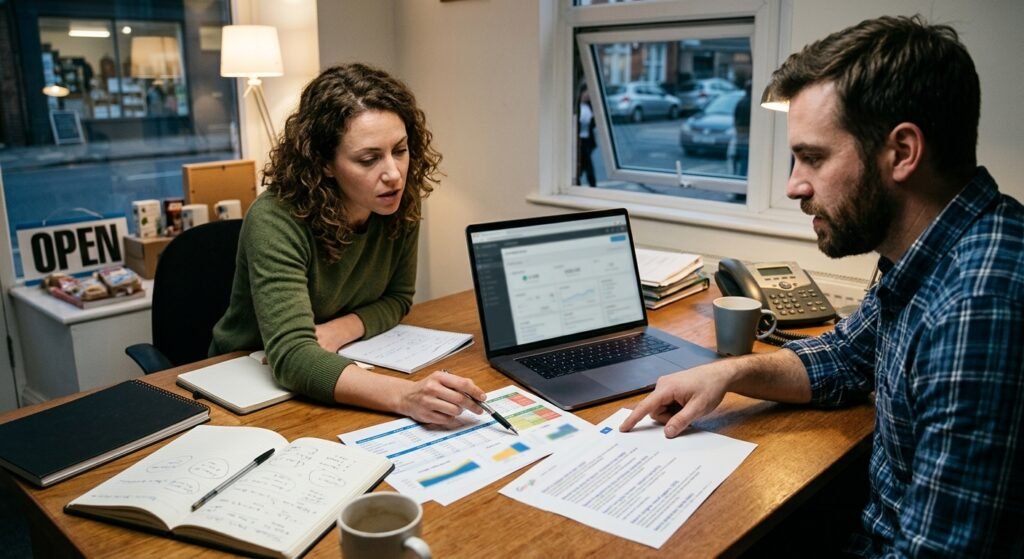
SEO is a long game. It can take three to six months, sometimes longer, before you see meaningful organic rankings, but once you’re ranking well, that traffic is essentially free and tends to be sustainable for years. PPC, on the other hand, delivers traffic almost instantly, but the moment you stop paying, that traffic disappears completely.
For a brand-new small business with no online presence yet, PPC often makes more sense in the short term simply because there’s no existing SEO authority to rely on. Meanwhile, businesses with an established website and some content already ranking might get more value from doubling down on SEO and using PPC only for specific, high-intent campaigns or seasonal promotions.
Table 2: Google Ads vs SEO — Quick Comparison for Small Businesses
| Factor | Google Ads (PPC) | SEO |
|---|---|---|
| Time to see results | Immediate (within days) | Slow (months) |
| Cost | Ongoing, pay-per-click | Free traffic once ranked, upfront time investment |
| Control over messaging | Full control over ad copy and targeting | Limited control over how content ranks |
| Sustainability | Stops when budget stops | Long-lasting once established |
| Best for | Quick leads, promotions, testing offers | Long-term brand authority and traffic |
Lead Generation Through Google Ads for Small Businesses
Lead generation via Google Ads remains one of the strongest use cases for small businesses in 2026, particularly for service-based industries like contractors, healthcare providers, real estate agents, and consultants. Unlike e-commerce, where the goal is a direct sale, lead generation campaigns focus on getting someone to fill out a form, call, or book a consultation.
The businesses that succeed here in 2026 tend to have a few things in common: a simple, fast-loading landing page, a clear call to action, and proper conversion tracking set up so Google’s AI can optimize toward actual leads rather than just clicks. Businesses that skip conversion tracking are essentially flying blind, letting the algorithm optimize for clicks or impressions instead of what actually matters, which is real leads and phone calls.
Call tracking has also become a bigger part of small business PPC strategy, since many local service businesses still get most of their conversions through phone calls rather than online forms. Google Ads now integrates call tracking directly, giving small businesses much clearer visibility into which keywords and ads are actually driving phone inquiries.
Common Mistakes Small Businesses Still Make With PPC
Even with better AI tools, small businesses continue to make the same fundamental mistakes that have plagued PPC campaigns for years. Many businesses set a campaign live, walk away, and check back weeks later wondering why they’ve burned through their entire monthly budget with no leads to show for it. Others bid on broad, expensive keywords without properly excluding irrelevant search terms through negative keywords, which quietly drains budget on searches that were never going to convert.
Another common issue is sending traffic to a generic homepage instead of a dedicated landing page built specifically for that ad campaign. A mismatch between what the ad promises and what the landing page delivers kills conversion rates fast, no matter how well-targeted the ad itself was.
Table 3: Do’s and Don’ts for Small Business Google Ads Campaigns
| Do’s | Don’ts |
|---|---|
| Set up proper conversion tracking before launching | Run campaigns with no clear conversion goal |
| Use negative keywords to filter out irrelevant traffic | Bid on broad match keywords without monitoring |
| Send traffic to a dedicated, fast landing page | Send all traffic to a generic homepage |
| Start with a modest budget and scale what works | Spend your entire budget testing one broad campaign |
| Use local targeting and call tracking for service businesses | Ignore location settings and target too broadly |
| Review performance weekly, at minimum | Set and forget the campaign for weeks |
Small Business Digital Marketing Trends Shaping 2026
Beyond Google Ads specifically, small business digital marketing trends 2026 show a clear shift toward automation combined with authenticity. Businesses that blend AI-driven PPC campaigns with genuine, locally relevant content and social proof, like reviews and testimonials, tend to outperform those relying purely on automated bidding with generic ad copy.
Video ads within Google’s ad network have also grown in importance, as more small businesses use short-form video content to build trust before someone even visits their website. Combined with Performance Max campaigns, which pull from multiple Google properties including YouTube, Display, and Search simultaneously, small businesses now have access to a much wider reach than traditional search-only campaigns offered in previous years.
Privacy changes and the ongoing reduction of third-party tracking data have also pushed Google Ads to rely more heavily on first-party data. This means small businesses that collect their own customer data, through email lists, CRM systems, or website interactions, now have an advantage when feeding that data back into Google’s targeting systems for better audience matching.
So, Is It Actually Worth It in 2026?
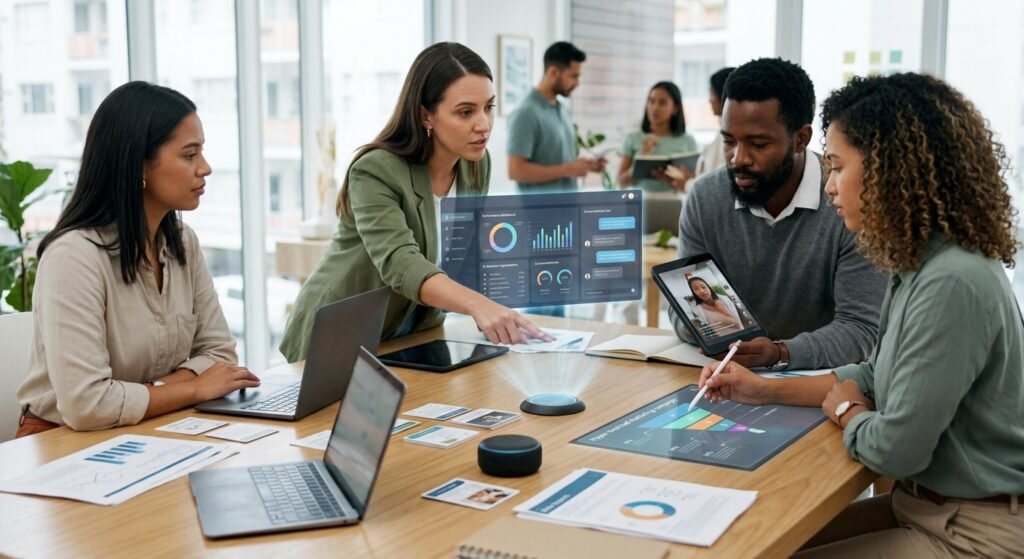
Bringing this all together, Google Ads for small business 2026 is worth it for most businesses, but with an important caveat: it works best when treated as a real strategy rather than a quick fix. Businesses that set clear goals, track conversions properly, target locally when relevant, and give the AI-driven systems enough clean data to optimize with, tend to see strong returns. Businesses that throw a small budget at broad keywords with no tracking and expect instant profit are usually the ones who walk away disappointed and declare PPC a waste of money.
The platform has genuinely gotten more powerful and more accessible for small businesses through AI automation, but that power still needs to be pointed in the right direction. Combined thoughtfully with SEO, a decent website, and some local marketing effort, Google Ads remains one of the most reliable ways for a small business to generate consistent, measurable leads in 2026.